|
Please
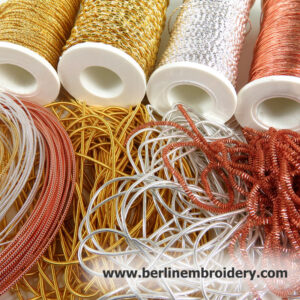
find below metal threads for goldwork embroidery. I have Gold,
Copper and Silver supplies for Goldwork embroidery which I have
broken them down into 6 Groups. Following is a section on Frequently
Asked Questions about Metal Threads and then a brief history
of Goldwork embroidery.
I
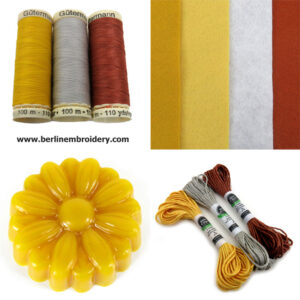
also provide the metal threads and fabrics required for the Goldwork
Projects in the Royal School of
Needlework Embroidery Technique Book which can be purchased
individually or in kit form.
Metal
Thread Glossary |
Metal Thread FAQ'S |
Home
Page! | View
Shopping Cart
METAL
THREADS
Metal
threads are packaged in clear acid free plastic or paper bags or
tissue paper. Please find below a wide selection of metal threads.
10%
discount on metal threads order over $120.00.
25%
discount on metal threads orders over $500.00.
Discount
applies to combination of Bullions, Purls, Couched metal threads and
Coloured metal threads only and not to be combined with metal
thread samples, other merchandise or kits. Discount will be
taken off your order on my end.
BULLIONS
Bright
Check Bullions
/ Wire
Bullions
/ Bright
Bullions
PURLS
Bright
Check Purls (Frieze Brilliant)
/ Rough
Purls
/ Smooth
Purls
/ Wire
Check Purls
/ Coloured
Purls
For
Pearl Purls Click Here
COUCHED
METAL THREADS
Flatworm
/ Grecian
Twists
/ Cords,
Twists (Torsade)
/ Jaceron
/ Japanese
Threads
Large
Back
/ Milliary
Wire
/ Passing
Threads
/ Pearl
Purls
/ Plates
/ Rococco
Spangles
(Paillette)
/ Dark
Gold Standard Lurex Thread No. 371
COLOURED
METAL THREADS
Red,
Blue, Green, Violet and Turquoise Check Purls
/ Red,
Blue, Green, Violet and Turquoise Rough Purls
Red,
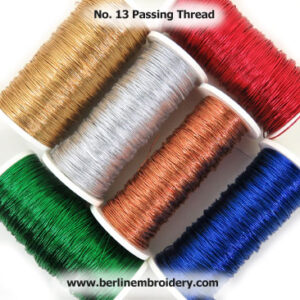
Blue, Green, Gold, Silver and Copper Passing Thread
SAMPLES
Samples
of Metal Threads
FABRICS
FOR GOLDWORK
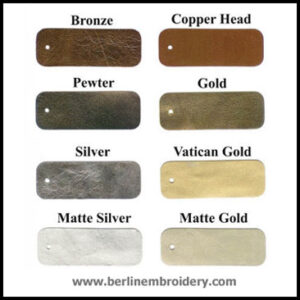
Kid
Leather
/ Muslin
/ Silk
Fabrics
SEWING
THREADS AND SUPPLIES
Kreinik
Metallic Threads
/ Au
Ver A Soie Silk
/ Soie
100/3 Silk Couching Thread
Polyester
Sewing Thread
/ Felt
/ Soft
Cotton Thread
/ Beeswax
GOLDWORK
TOOLS
Books
/ Goldwork
and Beading Pad / Japanese
Koma
/ Mellor / Needles
No. 12 Beading Sharp (Small)
Needles
No. 10 Crewel (Medium)
/ Needles
No. 18 Chenille (Large)
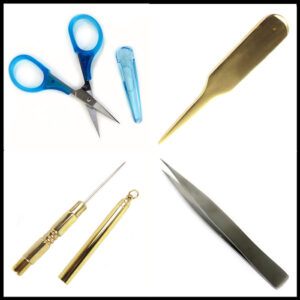
/ Stiletto
/ Tweezers
/ Velvet
Board
GOLDWORK
BOOKS
The
Art of and Craft of Goldwork
/ Beginners
Guide to Goldwork
/ Beetle
Collection
Goldwork
Embroidery Designs and Projects
/ Metal
Thread Embroidery
New
Ideas in Goldwork
/ The
Royal School of Needlework - Embroidery Techniques
GOLDWORK
KITS
Cardinal
/ Harebell
/ Honeysuckle
/ Marguerite
/ Or
Nue Dragonfly
/ Tudor
Rose
Goldwork
Sampler: Passing
Design
/ Heart
Design
/ Fleur
De Lys
/ Plate
Design
ROYAL
SCHOOL OF NEEDLEWORK
Royal
School of Needlework Embroidery Techniques Book
/ Supplies
for Goldwork Projects
GOLDWORK
KITS FOR GOLDWORK BOOKS ON THE MARKET
Beetle
Collection Book by Jane Nicholas
/ Please
Email me for Cost of Goldwork Beetle Kits
Goldwork
Embroidery Designs and Projects Book
/ Please
Email me for Cost of Kits in the Goldwork Embroidery Book
FREQUENTLY
ASKED QUESTIONS ABOUT METAL THREADS
What
is the difference between Gold 2% WM and Gilt?
Gold
2% WM is the highest standard gold thread that can be purchased for
Goldwork. 2% gold is also known as Admiralty or Government standard
and are 2% gold plating on white metal (WM) - silver plated copper.
Gold 2% is a brighter and truer in colour to real gold than the Gilt
metal threads.
Gilt
is about ½
% of Gold on silver plated copper. Gilt metal threads are similar in
appearance to the Gold 2% but Gilt tends to be more yellow in colour
and stretchier than the Gold 2%.
Can
I get pure gold embroidery threads?
I
do not have pure gold embroidery threads, I do not think there is a
company that makes these threads as the gold would probably be too
soft to be made into embroidery threads and would kink or break and
would be very expensive, but if anyone knows of a company that does
please email
me
and I will post a link on my website.
Will
the metal threads tarnish?
Yes
the 2% gold, gilt, silver and copper embroidery threads will tarnish
if exposed to continued spells of direct sunlight and air as oxides
and/or sulfides in the air settle on the surface of the metal thread
and cause it to turn dark brown or black over a period of time.
The
only metal threads that I supply that do not tarnish are the Dark
Gold Standard Lurex Thread No. 371, the No.
13 Passing Threads, all of the Japanese
Threads and the Kreinik
Cords and Kreinik
#4 Braids which are all synthetic threads.
If
you are beginning a new piece of embroidery the best way to decrease
tarnishing is to keep the embroidery wrapped in acid free tissue
paper or a sheet and stored in a dark place such as cupboard when you
are not working on the embroidery. The threads that are being used to
work the embroidery should also be stored in the same dark place as
the embroidery in acid free bags or tissue paper. This is to ensure
that that the metal threads will tarnish at a slower rather than in
direct sunlight or exposed to air and will tarnish at the same rate.
The finished embroidery should be mounted on acid free board and
displayed behind glass in a box frame so that the metal threads are
not touching the glass and displayed on a wall without direct
sunlight so that the threads will tarnish at a slower rate. All metal
threads will eventually tarnish.
Can
I clean metal threads?
I
do not think there is an effective way to clean the tarnish off the
metal threads or to clean the fabric without effecting the
embroidery. If you are beginning a new piece of embroidery then see
"will the metal threads tarnish?" above on how to decrease
the rate of tarnishing.
Can
the metal threads be used for garments?
The
metal threads that I sell are designed for pictorial design and for
very occasional wear and re-enactment clothing (traditionally the
threads were used for coats of arms, Military parade garments and
ceremonial garments). The metal threads are not suitable for mass
producing on clothing as the threads will distort and crack and
tarnish when washed or worn on a regular basis.
Can
the metal threads be used for making jewelry?
The
metal threads are not strong enough to be used for making earrings,
necklaces and bracelets and most of the metal threads will tarnish
when exposed to direct sunlight and the oxides in the air. The Kreinik
Cords and Kreinik
#4 Braids may be suitable for stringing beads and the
metal threads can be used for making broaches.
Can
the metal threads be used with a sewing machine?
The
only threads that I carry that can be used with a sewing machine is
the Kreinik gold
or silver No. 1 Japan thread or the Kreinik
silver and carnival cords all the
other metal threads are for hand embroidery.
Do
you give discounts for large quantities or sell wholesale?
I
give a 10% discount on metal thread orders over $120.00 Canadian
dollars. I give a 25% discount for orders over $500.00.
Do
you carry a certain metal thread?
All
the metal threads that I have in stock are on my website. If you
require a different metal thread please email
me
and I will see if I can order it from the manufacturer.
Metal Thread History
Gold
thread originally came from Asia, travelling to Beirut with the silk
merchants. Its use became widespread after the birth of Christ and it
could be found on vestments and clothes in countries like Cyprus,
Egypt, Greece Italy and Turkey. The Middle Ages brought the greatest
period of Church embroidery and much of it Goldwork, in what was
known as Opus Anglicanum. The quality of the work was so high that
orders came from all over Europe including the Vatican.
During
the fifteenth century a new technique known as Or Nué came
into production in Europe. Strands of gold thread were couched down
in pairs in coloured silks and were shaded by the closeness of the
stitches. After the Opus Anglicanum period, metal thread embroidery
was used exclusively to decorate clothing and furnishing for the
nobility and the church. Portraits from the Period of Queen Elizabeth
1 rein, illustrate how lavishly metal thread was used to decorate
clothing. Even Blackwork embroidery portrayed in the paintings of the
16th century, was mixed with metal threads and spangles.
During
the eighteenth century gold and metal threads were used extensively
and produced flamboyant garments worn in the English and continental
courts. Later metal threads garnished military dress uniforms and
civic regalia and still do today.
In
the nineteenth century during the Arts and Craft Movement wonderful
designs produced by William Morris, Lewis Day and others, but not
many used gold threads to a great extent.
In
the twentieth century Goldwork techniques were carried on through
the teaching and commission of the Royal School of Needlework and the
works of embroiderers such as Beryl Dean and Jane Lemon who use metal
threads in an imaginative and exciting way, on vestments and alter
frontals for the church.
Goldwork
continues today through the teaching of specialized teachers and
enthusiastic embroiderers. |